How Weather and Seasons Change Bell Tower Visits: A Month-by-Month Local Angle
A month-by-month guide to how weather, light and seasonal access shape bell tower visits, with practical...

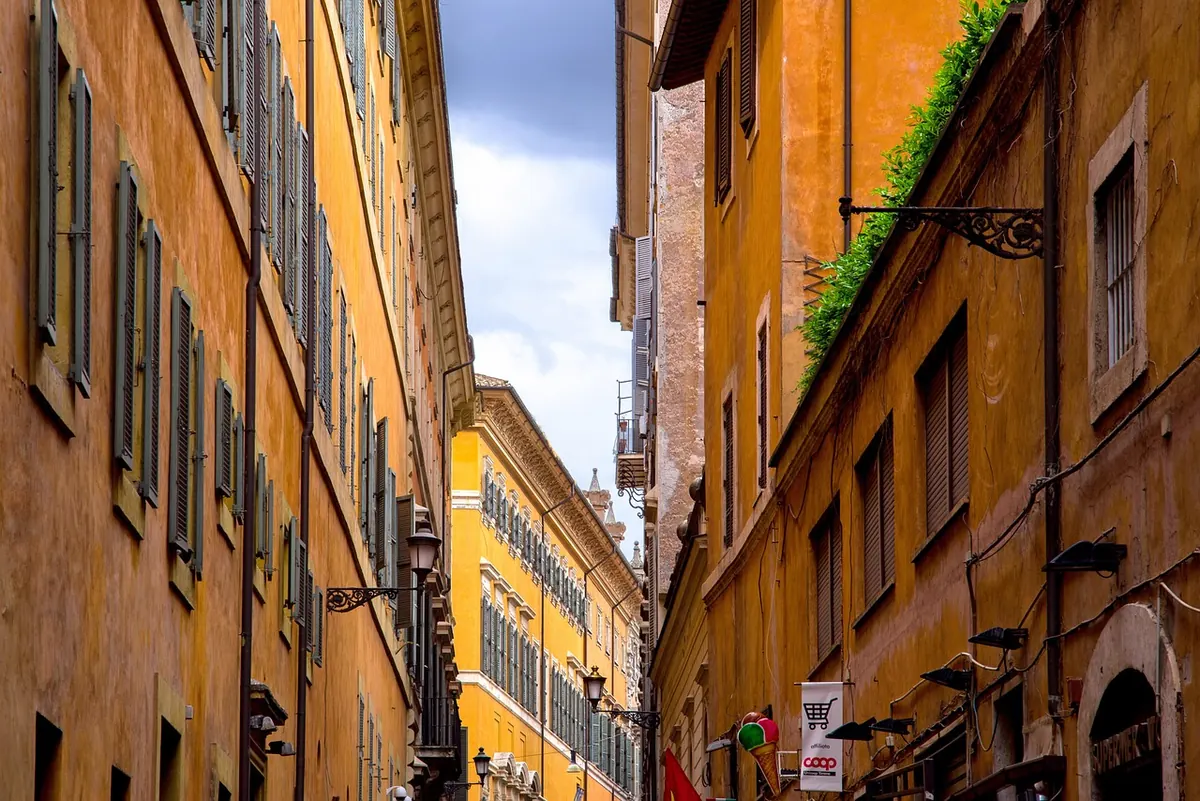
A bell tower is rarely the first thing you notice in an Italian town. The fountain, the café tables, the church façade take your eye first. Then a bell rings, or a shadow moves across the square, and you look up. The campanile has been keeping time for the town long before you arrived. This walk is built around that second look: how to find the towers, what to notice when you reach them, and how to let one tower lead you to the next without turning a morning into a checklist. It is also a way of reading the town in sequence—square, side street, hill, market—because the towers were built where people already gathered, prayed, traded, and argued.
Start in the main square, or in the small piazza beside the parish church. This is not a sentimental choice. Historic centres tend to gather around a church, a market place or a civic building, and the bell tower usually stands at that meeting point. Before you walk anywhere, stand still and trace the roofline with your eyes. Look for a square tower with open arches, a slim tower rising from a church wall, or a bell gable set on a roof like a small stone sail. Each tells a different story about the building it serves. A parish campanile speaks of the spiritual centre of the town; a civic tower near the market speaks of communal authority; a bell gable on a chapel may mark a confraternity, a former hospital, or a gate.
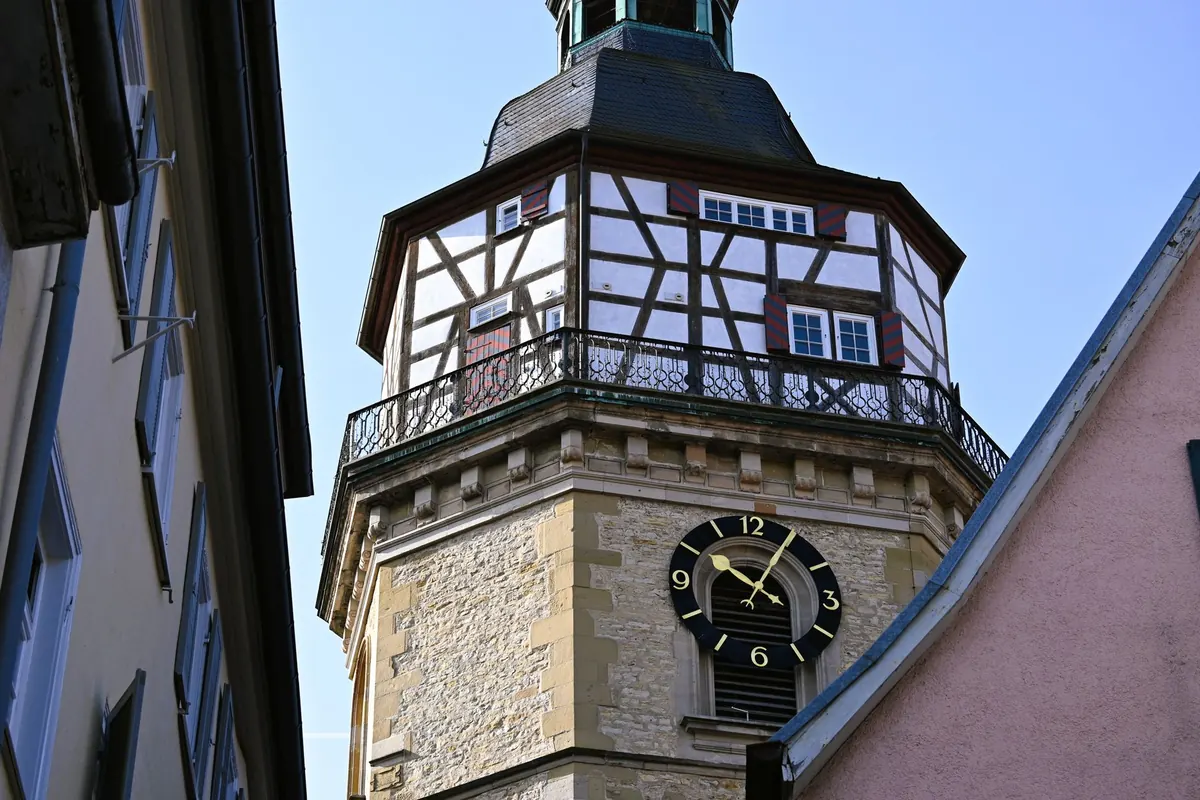
Check the clock face if there is one, but also look at where the clock sits. A clock added to an older tower often leaves a visible seam in the stonework. Note the base, too. Rough stone at the bottom and brick above can suggest different building phases, though only local records can confirm them. Take a photograph from the square, then another from the far side of the piazza. The change in angle will show you details you missed: a narrow stair turret, a blocked window, a saint in a niche. Look also at the bell openings. One arch may mean a single bell; several arches usually mean a ring of bells. If the bells are visible, notice their shape and the way they hang, but do not touch ropes or enter a bell chamber without permission.
If the church is open and a service is not in progress, step inside and look back toward the tower wall. The oldest masonry is sometimes visible from within, and the bell ropes or the base of the stair tell you how the tower works. Ask before taking photographs inside. A quiet, brief visit is better than a long one. If a service begins, leave promptly. In small towns, the church may close at midday, so plan a morning visit if the interior matters to you.
Bell towers are not evenly spaced for walkers. They follow the old shape of the town: the parish church at the centre, chapels at the edges, a convent on the hill, a civic tower near the market. A straight line on a map will often take you through private courtyards or up a steep dead end. Build the route in a loose loop instead, and let sightlines do some of the work. From the first tower, look for the next bell opening above the roofs. If you cannot see one, walk one street closer to the church and look again. This is not aimless wandering: towers were often placed to be seen and heard from the streets that mattered.
Use the hours when bells are likely to ring as a rough guide, but do not plan the walk around a performance. Bells mark prayer, funerals, weddings and civic time; they are not there for visitors. If a bell rings, stop where you are and listen. The direction and distance of the sound can help you decide which tower to approach next. In some towns the noon bell is still the strongest; in others, the evening Angelus carries farther. Do not assume; listen and note. If you hear two bells at once, you are probably between old parishes—a useful clue to the town’s former boundaries.
As you go, you will meet several kinds of tower:
At each tower, give yourself five minutes and a simple sequence. Start at the base. Look for the material, the joints, and any line where one building phase meets another. A tower that began as a defensive tower may have thicker walls and fewer openings at the bottom; a later bell chamber may sit on top like a crown. Look for inscriptions, coats of arms, or dates near the door. They are often high enough to be missed and low enough to be read if you step back.
Then move to the middle. Count the openings in the bell chamber. One arch may mean a single bell; several arches usually mean a ring of bells. Look for louvres, shutters, or wire mesh, and note whether the bells are visible. If you can see them, look at their shape and hanging: an older bell may be squatter and more deeply inscribed. Do not touch ropes or enter bell chambers unless you have permission. The mechanism is working history, not a playground.
Finally, look at the top. A pyramidal roof, a flat terrace, a small dome, or an open iron cage all suggest different periods and tastes. A cross or statue tells you who the tower belongs to; a weathervane tells you what the town watched. Check the corners for iron ties and repairs. Many Italian towers lean slightly or show cracks that have been stitched with metal. These repairs are part of the story, not a flaw to ignore.
A useful habit is to sketch the tower rather than only photograph it. You do not need to be good at drawing. The act of measuring the height with your pencil, or marking where the clock sits, forces you to look at proportions. You will notice whether the tower is tall and narrow or broad and low, and whether the bell chamber is the same width as the shaft or wider. Those proportions often date the tower more reliably than any plaque.
Bell towers are often in active churchyards, convents, or civic buildings. Walk quietly, dress respectfully if you plan to enter a church, and do not block doorways or steps. Check opening hours before you rely on seeing an interior; many small churches close at midday and reopen in the late afternoon. Carry water in summer, wear shoes that can handle uneven stone, and avoid the hottest hours if the route includes a climb.
A good walk of this kind does not need to cover the whole town. It needs a shape. Try this simple loop, adapting it to what you can actually see:
If you have less time, do only steps one and two. If you have more, add a second church or a hilltop convent. The point is not to collect towers but to let one building explain the next. A tower seen from a distance is a landmark; a tower seen from its own street is a piece of local history.
Use a paper map or an offline map if you can. Historic centres are full of dead ends, and a wrong turn is often more interesting than a correct one, but you still need to know how to get back. Ask locally about bells and towers: a parish secretary, a museum volunteer, or a neighbour in the square may know when the tower was rebuilt, why the clock is on one side, or which bell came from another church. A short conversation can turn a walk into a real local history lesson.
Finally, leave time to sit in the square after the walk. Listen for the bell you have just seen. The sound will now have a place attached to it: a tower, a street, a clock, a repaired crack, a view over the roofs. That is the reward of tracing bell towers through a historic Italian town. You began by looking up; you end by understanding where you are standing.
Photo: djedj / Pixabay
A month-by-month guide to how weather, light and seasonal access shape bell tower visits, with practical...
A practical comparison of campanile climbs by view, access and crowds, with tips on stairs, timing and...
A practical, step-by-step checklist for community groups taking on a village bell tower restoration, from...