How Weather and Seasons Change Bell Tower Visits: A Month-by-Month Local Angle
A month-by-month guide to how weather, light and seasonal access shape bell tower visits, with practical...

Bell towers are the most democratic monuments in a historic town. You do not need a ticket to admire them from the square, and you rarely need a guide to understand why they were built. But the moment you consider climbing one, the questions become practical: How many steps? Is there a lift? Will the terrace be packed? And will the view be worth the effort? The answer changes with the type of campanile. A village bell tower and a famous civic tower are not the same proposition, even if both look tempting from below.
The first thing to understand is that a bell tower is not a mountain viewpoint. It lifts you above roofs, not above the landscape. That is its charm. From a campanile you see the shape of a town: the curve of the piazza, the joins between old houses, the gardens hidden behind facades, the hills at the edge. You also see the tower’s own bells, often close enough to touch, and the stonework that looks plain from street level. The view is usually framed by louvred openings or arches, so it is not always a clean 360-degree panorama. On some towers you climb for one perfect window, not for an open terrace. That is still worth knowing before you queue.
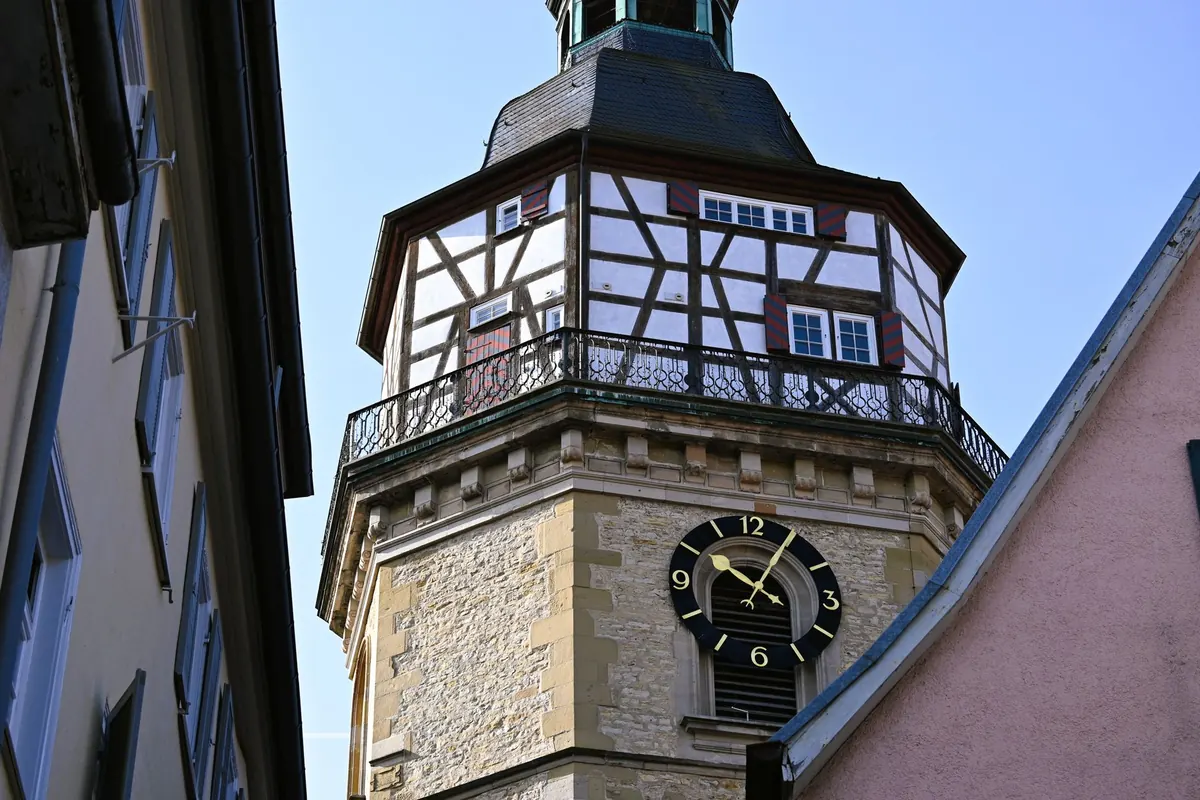
For many visitors, the sweet spot is the campanile of a small or medium-sized town. These towers are tall enough to give a clear view over the centre, but they are rarely on the same circuit as the blockbuster sights. Access is often simple: a door at the base, a staircase, a modest fee or donation, and a volunteer or custodian who is glad to see you. The climb may be narrow and uneven, and the opening hours may be short, but the reward is a view of ordinary local life rather than a queue of raised phones. Check locally before you plan around it. Parish offices, tourist information points and noticeboards are more reliable than a map listing. Go early in the day, when the stone is cool and the light is clear, and wear shoes with grip. If bells are ringing, cover your ears and keep moving; they are louder inside the tower than anyone expects.
Then there are the towers that appear on every itinerary: the tall civic campanili in art cities, with timed entry, security checks and a lift or a long staircase. The view can be superb, taking in the whole historic centre and the hills beyond. The trade-off is the crowd. You may share the terrace with dozens of people, wait for a space at the railing, and find the best angles blocked by glass or wire. Access is usually efficient but rigid: you buy a slot, you enter at that time, and you leave when your time is up. If you dislike queues, this type of tower is the one to skip or book carefully. First entry of the day is often calmest; late afternoon can be beautiful but busier. Ask whether the ticket includes a lift to the top or only partway. A lift to the first gallery can still leave a steep final climb.
Some of the most memorable climbs are not advertised. A parish bell tower may open for a local festival, a heritage weekend or by arrangement with the parish. These towers are often lower, with simple stairs and a single viewing level. What you lose in height you gain in intimacy: you look down on the church roof, the village square and the surrounding fields, and you hear the story of the building from someone who knows it. The catch is unpredictability. Opening times can change, access may be restricted for safety, and there may be no facilities at all. Ask politely, respect any closed door, and never climb a tower that is not clearly open to visitors. If you do get up, take your time and keep your voice low; these are working buildings, not attractions.
Height is only part of the story. The climb itself decides whether the view feels like a reward or a chore. Before you commit, ask the practical questions.
Answer these before you join a queue. A tower with 200 steps and three landings can feel easier than one with 150 steps in a tight spiral. If you have heart, lung, knee or balance concerns, ask a health professional before climbing; that is not a decision to make at the ticket desk. And if you are climbing with children, keep them close on open galleries and do not let them lean on railings.
The view is not only about architecture; it is about atmosphere. A tower that is magical at 8 a.m. can be a scrum at noon. Use a simple routine:
On a busy day, the practical move is to climb the less famous tower first. You may get a better view of the famous one from a distance than from its crowded terrace. And if the queue is longer than the climb, leave it. The town will still be there from street level.
The best tower is not always the tallest; it is the one whose stairs, opening hours and crowds match your day.
Climb the campanile if you want to understand the shape of a place, you are comfortable with stairs or have confirmed lift access, and you can be flexible about timing. Skip it if you want solitude at noon in high season, if the only access is a narrow one-way stair and you dislike confined spaces, or if the tower is not officially open. The best climbs are rarely the most famous ones. A small town tower with a volunteer at the door and a view over roofs and gardens can be more memorable than a grand terrace with a timed ticket. Check the practical details, take your time, and let the view do the rest.
Photo: Pexels / Pixabay
A month-by-month guide to how weather, light and seasonal access shape bell tower visits, with practical...
A practical walking route for reading a historic Italian town through its bell towers, from belfry details...
A practical, step-by-step checklist for community groups taking on a village bell tower restoration, from...