How Weather and Seasons Change Bell Tower Visits: A Month-by-Month Local Angle
A month-by-month guide to how weather, light and seasonal access shape bell tower visits, with practical...

A bell tower usually outlives everything around it. Roofs are replaced, naves are remodelled, the houses at its feet are demolished and rebuilt, and still the tower stands there, holding the same bells, wearing the same stone. Ask when it was built and the honest answer is often a span of centuries rather than a year: a twelfth-century shaft, a fifteenth-century bell chamber, a nineteenth-century repair in bright new brick. Reading those layers is one of the most satisfying things you can do as a heritage enthusiast, and most of the evidence is in plain sight — if you know where to look and in what order.
Start at the base and work upwards. The foot of a tower carries the most weight and is the least tempting part to alter, so the oldest masonry usually survives there. Walk a full circle before forming any opinion. The north side, permanently in shadow, often escapes the stucco and paint applied to the sunny facade, and it is frequently the most honest surface on the building.
Look for what masons call a seam: a vertical line where one stretch of wall butts against another instead of bonding into it. Seams mean phases. So do sudden changes in stone type — rough local limestone giving way to neatly cut blocks, or a patch of thin, flat Roman bricks recycled from some earlier ruin, a habit so common in Italy that it has its own name, spolia. Mortar is just as talkative. Old lime mortar is soft, pale and often deeply eroded, with joints recessed by centuries of rain. Hard grey cement pointing, crisp and proud of the surface, is almost always a twentieth-century intervention. Carry a small notebook and a coin or pencil for scale, and photograph in flat light rather than hard midday sun.
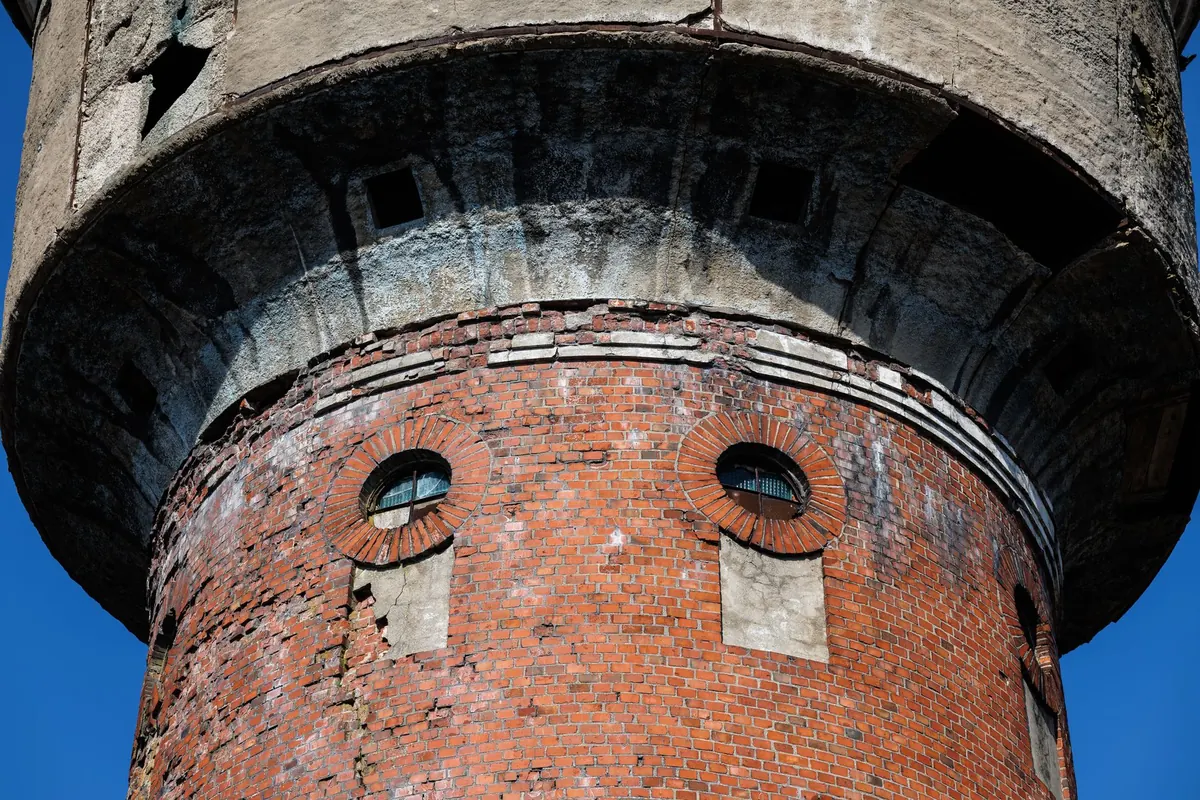
Where a tower is built of brick, the bricks themselves give you a rough date range. Handmade bricks vary in colour and shape within a single course; later, machine-made bricks are unnervingly uniform. Measure a run of ten bricks including their joints, then divide: the average size tells you more than any single brick. Thin, long, flattish bricks, often reused, point to an early phase. As centuries pass, bricks tend to grow thicker and squarer, and joints grow thinner and more regular.
Bonding patterns matter too. A wall laid in careful alternating courses, with every third or fifth course projecting slightly, is doing something deliberate; a chaotic mix of headers and stretchers often means a repair. Record the following while you are on site:
String courses and corbel tables are useful boundaries. Builders often finished a stage of work with a projecting band before starting again, so a tower with three string courses may well have three building campaigns.
Openings are the easiest features to date and the easiest to fake. A round-headed arch belongs to a Romanesque habit of building; a pointed arch signals the Gothic centuries; a flattened segmental arch or a heavily moulded rectangular frame often points to the Renaissance or later. Window size tends to grow over time. A small single-light slit window low in the shaft, a two-light bifora higher up and a wide four-light trifora or quadrifora at the bell stage is a common upward progression, and the tower is effectively telling you which parts came first.
Be careful with restorers. The nineteenth and early twentieth centuries produced a great deal of confident rebuilding, and a perfectly crisp Romanesque window can sit in a wall that was taken down and reinstated a hundred and fifty years ago. Compare the crispness of carving with the weathering of the surrounding stone. Old detail is softened, pitted and often darkened; new detail is sharp, and its edges catch light differently.
Bells are the most reliably dated parts of a tower and the least reliable guide to its age. A medieval tower can hold bells cast in 1923, and a baroque tower can still ring a bell from the 1400s. Founders signed their work, and their inscriptions are worth reading carefully. Look at the shoulder and the waist of the bell for a date, the founder's name and town, a line of Latin or a saint's name, and often the donor or the churchwarden who paid. A bell recast after a crack will carry the new date but may preserve the wording of the old one, which is exactly the sort of contradiction that makes local history interesting.
Ask permission before going up. Bell chambers are genuinely dangerous places — ladders, loose floors, moving frames and, in a working tower, bells that swing without warning. Many parishes will happily arrange a visit for a serious enquirer, and a photograph taken from the doorway will often answer your questions anyway. If you do get inside, note whether the frame is timber or iron, how the bells are hung, and whether the masonry of the chamber differs from the shaft below. The bells may be recent; their room may not be.
Stone rarely lies, but it exaggerates. Datestones on bell towers frequently record a restoration, a new bell chamber or a benefactor's gift rather than the first stone. Read every carved number on the building and then ask what that date is attached to. Look also for coats of arms, mason's marks scratched into dressed stone, simple scratch dials, and names cut into the softer blocks near the door — sometimes the parish priest, sometimes the massaro or churchwarden responsible for the works.
When the stone runs out, go to paper. Parish account books, diocesan visitation records, notarial deeds and old guidebooks will often give a date for a collapse or a rebuilding that explains the seam you noticed. Compare historic photographs and early maps: a tower that lost its spire in an earthquake or a wartime requisition will look very different, and the stump that remains can be confusing without that knowledge. Local archives and heritage offices are usually glad to help someone who arrives with specific questions and a sketch.
The aim is not a single confident year but a defensible range, with the evidence attached. "Shaft probably twelfth to thirteenth century; bell chamber rebuilt in the seventeenth; upper brickwork repointed in the twentieth" is worth far more than a guess, and it is the kind of note a local heritage group can actually use. Photograph everything with a scale, mark which side of the building you are on, and never scrape at mortar or stone to see what lies beneath — you will destroy the very evidence you came for.
Finally, treat your conclusions as provisional. A single document, a newly cleaned inscription or a bell founder's record can shift a date by a century, and that is not a failure of method but the ordinary rhythm of local history. Look closely, write down what you saw, and let the tower keep the last word.
Photo: Alexander Popadin / Pexels
A month-by-month guide to how weather, light and seasonal access shape bell tower visits, with practical...
A practical comparison of campanile climbs by view, access and crowds, with tips on stairs, timing and...
A practical walking route for reading a historic Italian town through its bell towers, from belfry details...